
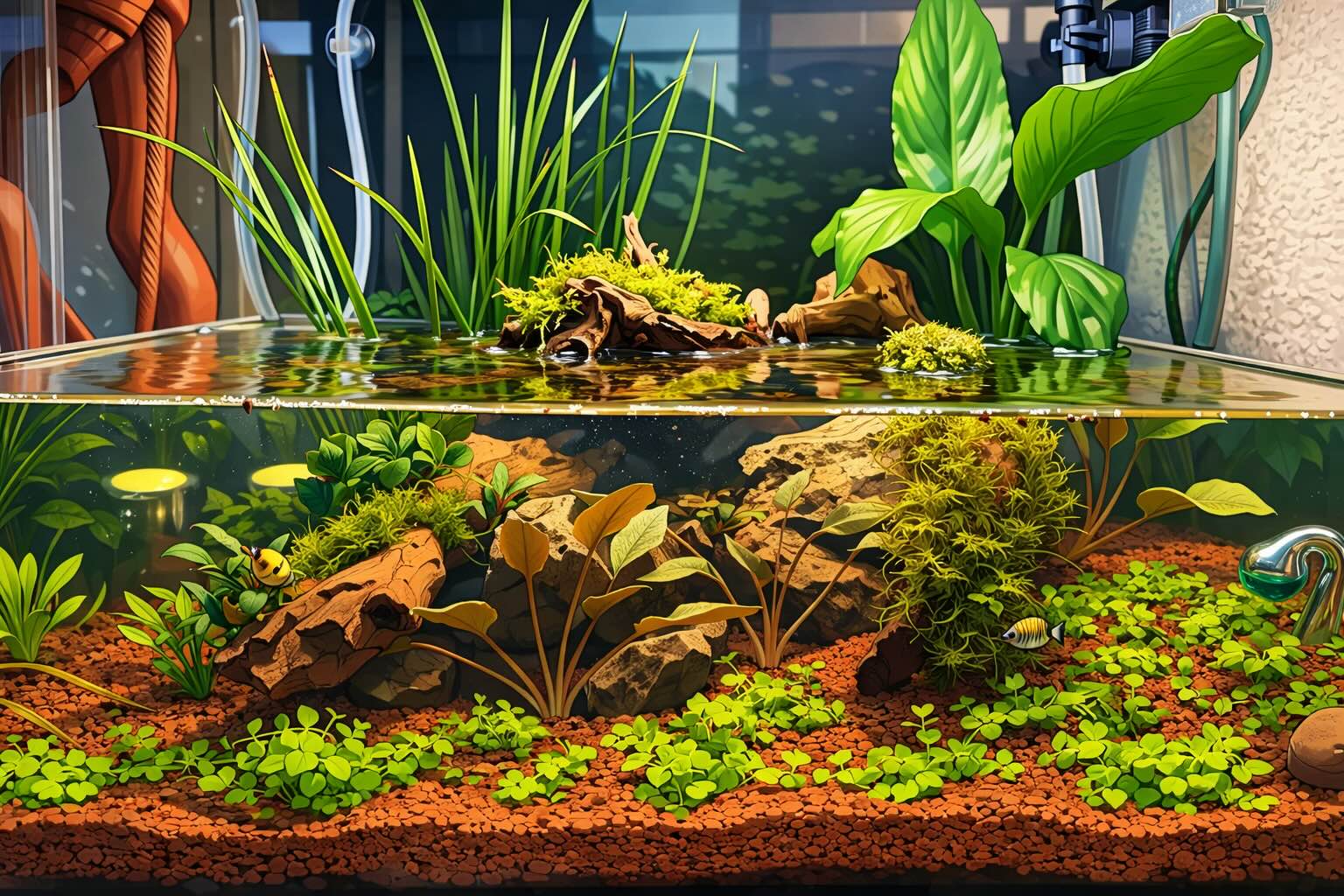
I’ve been wanting to try something different with my aquarium setup, and this time I decided to venture into the world of low-water aquascaping. Instead of the traditional fully-filled tank, I opted for an aquarium filled only about one-third with water, creating a unique environment that bridges the gap between aquatic and terrestrial plant life.
Table of Contents
The Concept
This setup is inspired by paludariums and terrariums, where plants thrive both above and below the waterline. It’s a fascinating way to incorporate plants that wouldn’t normally survive in a fully submerged environment, opening up exciting possibilities for creating diverse, layered landscapes.
The Foundation
For the substrate, I chose JBL Manado, a reliable and plant-friendly option that provides excellent support for root development. It’s porous, nutrient-rich, and helps create a stable foundation for the diverse plant selection I had in mind.
The Plant Selection
This is where things got interesting. I sourced all my plants from Aquaplantsonline (not sponsored, just genuinely impressed with their service). They consistently deliver healthy plants with an impressive selection, and everything arrives in perfect condition.
Here’s the full roster of plants I incorporated into this scape:
- Taxiphyllum barbieri (Java Moss): A classic, versatile moss that’s perfect for adding texture
- Micranthemum monte carlo: A beautiful carpeting plant that creates a lush green foreground
- Bucephalandra biblis red: Adds a gorgeous pop of color with its reddish hues
- Cryptocoryne parva: One of the smallest Crypts, perfect for detail work
- Anubias nana mini: A compact, hardy plant that thrives in low-light conditions
- Cryptocoryne beckettii: Brings lovely brown and green tones to the mid-ground
- Cladophora aegagropila (Moss Ball): A fun, spherical addition that helps with water quality
- Spatiphyllum Wallissi (Peace Lily): A semi-aquatic plant perfect for the emergent portion
- Acorus Gramineus: Grass-like foliage that adds vertical interest above the waterline
The last two plants, Spatiphyllum and Acorus, are typically used in paludariums and terrariums, making them ideal for the portions of the tank that extend above the water.
We’ll see how the plant growth develops over the coming weeks. Depending on how well they fill in and establish themselves, I may add more plants in the near future to create a fuller, more lush appearance.


The Equipment
Lighting
For lighting, I’m using the Week Aqua S300 series, which I also purchased from AliExpress. This compact light is perfect for smaller aquariums and offers 25W of power with an RGB+UV spectrum. The UV spectrum helps promote plant coloration, making aquatic plants grow more vibrant and vivid.
What makes this light particularly impressive is its Bluetooth app control, allowing me to customize the spectrum, set timers, and even create sunrise/sunset effects. It provides 1500 lumens of light output with 30 RGB LEDs plus 10 UV LEDs, which is more than sufficient for the plants I’ve chosen. The aluminum alloy heat sink keeps everything cool, and the adjustable stand makes positioning easy. For more detailed specifications, you can check out the Week Aqua website.
Filtration
I scored an excellent deal during Black Friday on the VEVOR Aquarium Filter 172GPH (8W UV lamp model) for just €35. Normally priced around €50, this was too good to pass up. This external filter has been a game-changer. The built-in UV light is particularly exciting as it helps eliminate harmful organisms and keeps the water crystal clear. I’m genuinely impressed with how well it performs, and it’s remarkably quiet during operation. For the price point, it’s an absolute steal.

CO2 System
To give my plants the best possible start, I set up a DIY CO2 system that I purchased from AliExpress. Instead of expensive CO2 canisters, this system uses a simple chemical reaction between sodium bicarbonate (baking soda) and citric acid monohydrate mixed with water to generate CO2. It’s cost-effective, easy to maintain, and provides a steady supply of CO2 to help the plants thrive during this crucial establishment period.

The Plan Moving Forward
Right now, the focus is entirely on letting the plants establish themselves. I want to give them time to develop strong root systems and adapt to their new environment. The tank needs to mature, the beneficial bacteria need to colonize, and the ecosystem needs to find its balance.
Sometime around the end of December 2025 or early January 2026, I’ll introduce the tank’s first inhabitants—likely a combination of fish and shrimp. But for now, patience is key. There’s something meditative about watching plants slowly grow and transform a bare tank into a living, breathing ecosystem.
Final Thoughts
This low-water aquascape has been a refreshing departure from traditional setups. The combination of aquatic and semi-aquatic plants creates visual depth and interest that you simply can’t achieve with a standard fully-submerged tank. If you’ve been thinking about trying something different with your aquarium hobby, I highly recommend exploring the world of paludariums and low-water scapes.
Stay tuned for updates as this tank matures and eventually welcomes its aquatic residents!
Leave a Reply