
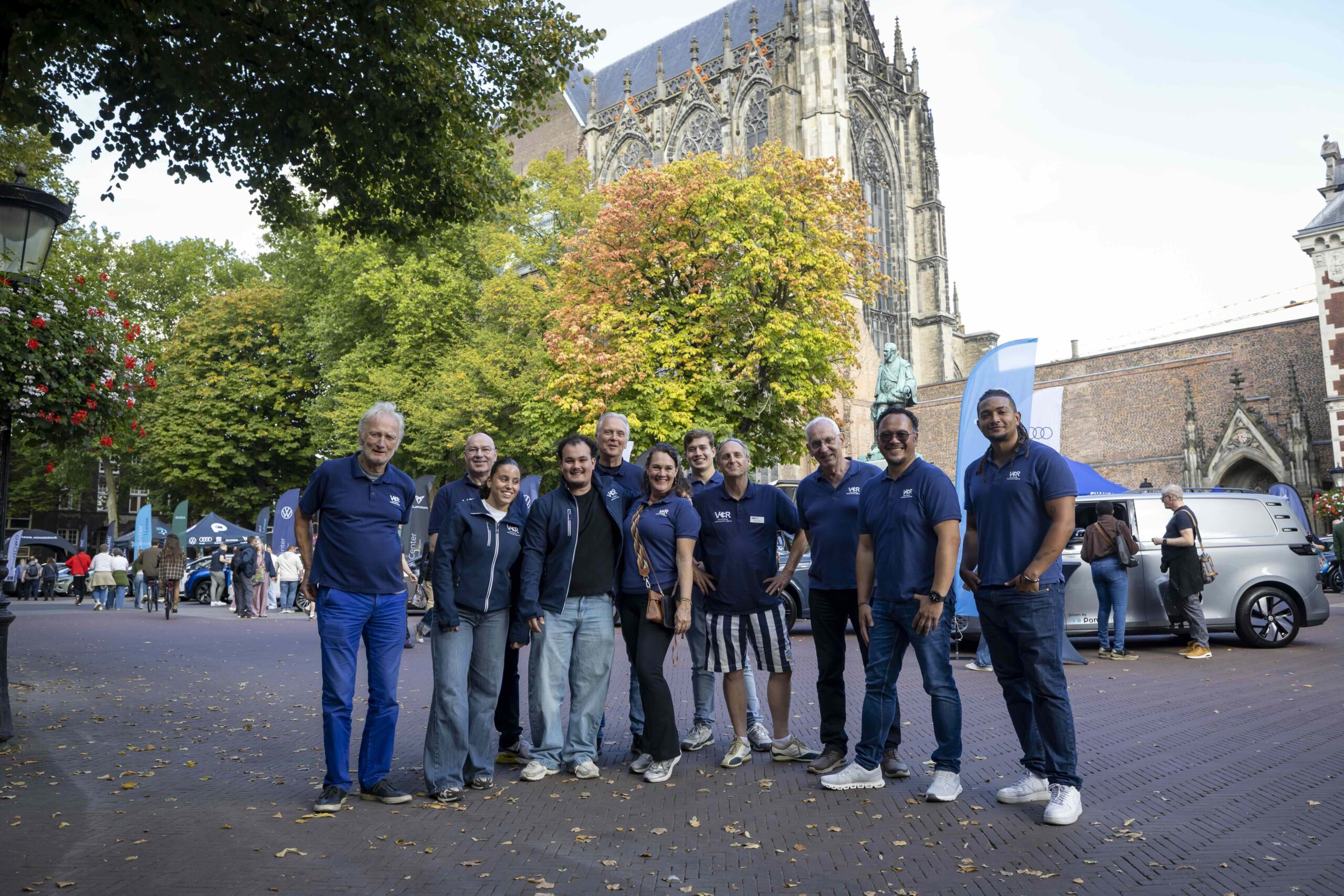
Two weekends, two squares full of electric cars, and a lot of conversations that went far beyond “which car suits me”. I was there as a volunteer for the Vereniging Elektrische Rijders (VER, the Dutch Electric Drivers Association) at Ontdek Elektrisch Almere and Ontdek Elektrisch Utrecht. Here’s what was on show, which questions came up most, and where you can catch the next edition.
Discover Electric Almere
On Saturday 19 September, together with the Vereniging Elektrische Rijders, we turned the Forum and Diagonaal in Almere into an open-air showroom. Dealers showed off their models, and our VER volunteers, all experienced EV drivers themselves, added independent advice based on daily, real-world experience.
That combination is exactly what makes the difference: looking at a car at a dealer gives you one perspective, but a conversation with someone who has driven the car for years gives you a completely different one. At Ontdek Elektrisch Almere, you got both in one place.
Brands on display included:
- Tesla, Hyundai, BYD, Lotus, Genesis, Mazda, Nissan, Suzuki, Alpine, Changan, Renault and Mitsubishi
There was also an electric kiddie train, so children stayed entertained while parents took their time browsing. The event was free to attend, from 11:00 to 16:00, with no registration needed.


What stuck with me after Almere
After a full day of conversations about electric driving, I noticed that almost none of them were only about the car itself. Visitors naturally wanted to know which car would suit them, but the follow-up questions were about the bigger picture:
- How does charging at home actually work?
- What role do solar panels play in that?
- Does a home battery make sense for me?
Charging on the road came up a lot too: public charging, fast charging, and how a temporary subscription with Ionity, Fastned or Electra can get you well prepared for a holiday abroad. These are exactly the questions that make the difference between exploring the idea and actually making the switch.
Alongside established names like Volvo, Tesla and Renault, newer brands such as Genesis, Changan, Jaecoo and Omoda were also on display. Kip Caravan’s showed a caravan that couples to an EV without any trouble, a good example of how fast this market keeps evolving.
Discover Electric Utrecht
A week later, on Saturday 26 September, it was Utrecht’s turn. Ontdek Elektrisch Utrecht took place on Domplein, and the weather cooperated fully: sunshine, a packed square, and rows of electric cars.
The established players were there with brands like Volkswagen, Renault, Tesla, BMW and Mini, joined by newer names such as Changan, Jaecoo and Omoda. There was also plenty to see for anyone who likes to travel by camper or caravan: Kip Caravan’s was back, and Ventje showed off, among others, the Volkswagen ID Buzz camper.
A word of thanks to the dealers who made this event possible: Pon, Bochane, Nefkens, Stam, Knoop Maarssen, Wittenberg and Hans Jongerius. Thank you for being there and taking the time to help visitors.


Next stop: Den Bosch
The series continues. On Saturday 3 October, Ontdek Elektrisch Den Bosch takes place on the Parade. You’ll find more information on the Vereniging Elektrische Rijders event calendar.
My own take on these events
A few things came up again and again in the conversations I had, and they’re worth digging into a bit further.
ERE certificates. A surprising number of people asked about ERE certificates, and understandably so: it’s a new topic for most drivers. ERE stands for “emissiereductie-eenheden” (emission reduction units). In short, fuel suppliers in the Netherlands are required to make their fuels more sustainable, and one way they can meet that obligation is by buying certificates from people who charge their EV at home on renewable electricity. If your charging point has a certified MID meter, the kWh you charge at home can be registered and converted into ERE certificates, which then get sold on and paid out to you, typically once a year. It’s not a huge amount of money, but it’s a genuine bonus on top of the savings you already make by driving electric, and it’s worth checking whether your home charger qualifies.
Can we trust the new brands? With names like Changan, Jaecoo, Omoda and Genesis showing up alongside established manufacturers, I got a lot of questions about whether these newer brands can really be trusted. The concerns were mostly practical: are spare parts easy to get, is after-sales service reliable, and how does car insurance handle a brand with a shorter track record in the Netherlands? These are fair questions, and the honest answer is that it varies per brand and per dealer network. It’s worth asking the dealer directly rather than assuming a new badge automatically means more risk or less risk.
The range question. Range keeps coming up, and there’s still a strong desire for “more is better.” When I ask people why they need that much range, the answer is often about occasional long trips rather than daily use. For most people, the average commute and errands fit comfortably within the range of almost any current EV, and the real question is less about maximum range and more about charging habits and route planning for the few longer trips a year.
Who I talked to. Beyond the technical questions, the people themselves were just as interesting. I spoke with drivers who’ve been fully electric for years and were simply curious about the newest models, people currently driving a hybrid who are considering the full switch, and people who are mainly driven to look at EVs because of the price of petrol. Different starting points, but the same event managed to answer questions for all of them.
Were you at one of these events, or are you considering the switch to electric driving yourself? Let me know in the comments.
Leave a Reply